
A Tanker Called Panda
In January 2025, the US Treasury’s Office of Foreign Assets Control added a Vietnam-flagged crude oil tanker called Panda to its Specially Designated Nationals list. The vessel had been making regular port calls at Russian terminals where oil consistently traded above the G7 price cap of $60 per barrel. The Panda was owned by a Vietnamese company called Sao Viet Petrol Transportation. The same company owned the tankers Ivy and Leopard, also Vietnam-flagged, also part of what officials now routinely call Russia’s shadow fleet. Sao Viet’s vessels had carried both Russian and Iranian crude, the two largest categories of sanctioned oil in the world.
A single corporate entity. Vietnam-flagged ships. Russian oil to Asian buyers. Mixed cargoes from Iran. None of this would have existed at scale before 2022. All of it now operates as routine commerce in a parallel infrastructure that did not previously have a name.
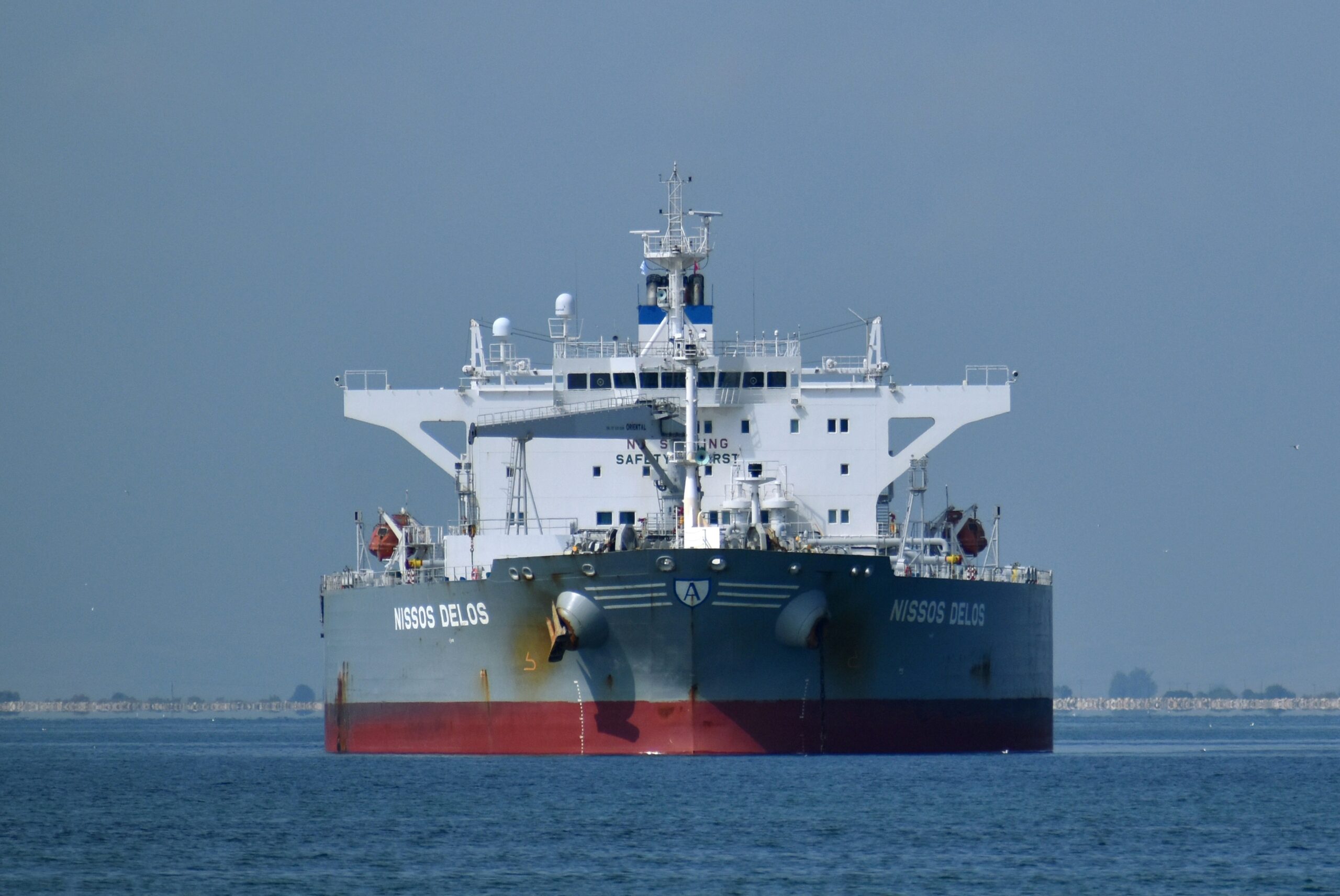
The Panda is one tanker among hundreds. By December 2025, the European Union had designated nearly 600 vessels as part of Russia’s shadow fleet. The United States had designated more than 180. The United Kingdom continued to add tankers in package after package. The fleet itself, according to estimates from energy intelligence firm Kpler, has grown from approximately 100 ships in March 2022 to over 350 active shadow-fleet vessels by mid-2024.
Shadow shipping is the most visible part of a much larger phenomenon. The sanctions imposed since 2022 have produced an industrial-scale shadow infrastructure that operates parallel to the regulated global financial system. This infrastructure is not theoretical, not marginal, and not going away.
This article documents what has been built, why it works, and what it means for markets in 2026 and beyond.
The Architecture of Evasion
The shadow infrastructure has four main components, each of which has scaled dramatically since 2022.
The first is shadow shipping, primarily oil tankers operating with opaque ownership, frequent flag changes, and parallel insurance arrangements designed to keep sanctioned crude moving regardless of Western restrictions.
The second is parallel financial rails, payment and clearing systems that allow sanctioned countries and counterparties to settle cross-border transactions without routing through dollar-based correspondent banks or the SWIFT messaging network.
The third is third-country re-export networks, supply chain structures that route restricted goods through intermediary jurisdictions before reaching their final destinations, allowing sanctioned end-users to acquire components and products that would be blocked through direct trade.
The fourth is shadow banking, the universe of front companies, opaque correspondent relationships, and informal value transfer systems that move sanctioned money around the perimeter of the regulated financial system.
These four categories interact and reinforce one another. A shadow tanker carries crude purchased through a shell company. The shell company settles payment through a non-Western correspondent banking relationship. The proceeds are routed to procurement networks that source components from third-country re-exporters. Each function depends on the others, and each has matured substantially in the past three years.
Shadow Shipping
The shadow fleet is the best-documented part of the evasion architecture, in part because tankers are physical objects that satellites can track.
A Tripled Fleet
In March 2022, when the G7 first began discussing oil sanctions on Russia, energy analysts identified roughly 100 vessels operating with the kind of opaque ownership and irregular flag patterns associated with sanctions evasion. By mid-2024, that figure had risen to over 350. By late 2025, the European Union alone had formally designated nearly 600 vessels as part of Russia’s shadow fleet, with the United Kingdom and United States adding their own designations on top.
The growth was not gradual. It was deliberate and rapid. Russia anticipated the sanctions architecture and had been quietly building shadow capacity for years before the war. The acceleration after February 2022 was the activation of plans already in motion.
How It Works
Shadow tankers typically operate with several distinguishing features. Ownership is registered through layered corporate structures in jurisdictions that do not require beneficial ownership disclosure. Flags change frequently as vessels designated by US Treasury have been observed flying flags from Antigua and Barbuda, Barbados, Belize, the Cook Islands, Djibouti, Gabon, Liberia, Panama, San Marino, Sierra Leone, and Vietnam, often switching multiple times in a single year.
Insurance is provided through parallel markets that do not require compliance with the G7 price cap. Many shadow tankers operate without conventional Protection and Indemnity insurance, relying instead on Russian-state-backed arrangements or self-insurance through obscure entities. Ship-to-ship transfers in international waters allow Russian oil to be loaded onto tankers that subsequently appear, on paper, to be carrying crude of unspecified origin.
The price cap itself has become a fiction in many cases. By December 2025, the spread between Russian Urals crude and Brent had widened to roughly $26 per barrel, suggesting Russia was selling at substantial discounts in some channels. But Russian government data shows oil revenues remained robust, indicating that a meaningful share of Russian crude was being sold above the cap through shadow-fleet channels that successfully evaded enforcement.
Why Enforcement Asymmetries Matter
Not all sanctions are created equal. Research from Kpler comparing tanker productivity before and after designation shows a striking pattern. Vessels added to the OFAC sanctions list experience an average productivity decline of 70 percent. Vessels sanctioned only by the EU or UK see a productivity decline of just 30 percent.
The reason is straightforward. US sanctions carry the threat of secondary action against any foreign entity that does business with the designated party. Foreign banks, ports, and counterparties cut off OFAC-designated tankers because the cost of triggering secondary sanctions outweighs the benefit of the trade. EU and UK sanctions carry no such global enforcement reach.
The numbers reveal the asymmetry clearly. By late 2025, 18 percent of India’s crude imports were carried on EU- or UK-sanctioned tankers. Only 0.5 percent arrived on OFAC-sanctioned vessels. Indian importers will buy from European-designated ships. They will not touch American-designated ships. The dollar’s centrality to global finance is the reason.
This asymmetry has implications well beyond shipping. It is the central reason why US sanctions remain meaningfully more powerful than equivalent measures from other major jurisdictions, despite the gradual erosion of dollar dominance discussed elsewhere.
Parallel Financial Rails
The financial side of the evasion economy has scaled even faster than the shipping side, though it is harder to see because the activity is digital rather than physical.
CIPS Has Grown Dramatically
China’s Cross-Border Interbank Payment System processed approximately $14 trillion in transactions in 2022. By 2024, that figure had reached $24.47 trillion representing a 75 percent increase in two years. Daily transaction volume reached $90.95 billion by late 2024, growing 24 percent that year alone, four times the growth rate of SWIFT. On April 16, 2025, CIPS surpassed SWIFT in single-day transaction volume for the first time in its history.
The participant network has expanded in parallel. As of November 2025, CIPS had 190 direct participants and 1,567 indirect participants spanning 124 countries. The Chinese central bank confirmed in mid-2025 that CIPS had forged its first direct partnerships with six foreign banks in the Middle East and Africa, expanding the system’s reach into regions that had previously routed all yuan transactions through Hong Kong or Singapore.
This is not marginal infrastructure. It is real, growing, and being deliberately built as an alternative to dollar-based payment systems.
The SWIFT Dependency
The story is more complicated than the growth figures suggest. Approximately 80 percent of CIPS transactions still rely on SWIFT for messaging. The two systems do different things: SWIFT moves financial messages; CIPS settles yuan-denominated payments. Most CIPS users still need SWIFT to communicate the underlying transaction details.
The yuan’s broader role tells a similar story. The Chinese currency accounts for just 3 percent of payments processed through SWIFT, compared to 48 percent for the US dollar and 24 percent for the euro. The yuan’s share of central bank reserves stood at 1.93 percent in the third quarter of 2025, lower than its peak of 2.8 percent in early 2022.
CIPS is a serious system that has scaled meaningfully. It is not yet a replacement for SWIFT, and the gap remains large. The combination of growing CIPS volume and stagnant yuan reserve share is the data point that captures the real situation. Sanctioned trade is finding its way through CIPS at increasing scale. The yuan itself is not becoming a global reserve currency.
Russian-Specific Channels
Russia operates additional systems beyond CIPS. The Russian Financial Messaging System, known as SPFS, was built in 2014 in response to early Western sanctions threats. It now has roughly 600 connected institutions, mostly Russian and former-Soviet banks. Russia and China have linked SPFS and CIPS to allow direct settlement between their respective domestic systems for bilateral trade. By late 2024, an estimated 90 percent of Russia-China trade settled in rubles or yuan rather than dollars.
These linkages are technically simple but politically important. They demonstrate that countries facing severe sanctions can construct working payment infrastructure in years rather than decades, particularly when they have existing trade relationships and willing institutional partners.
Third-Country Re-exports
The supply chain side of the evasion economy is the least documented but probably the largest by volume.
How Goods Reach Sanctioned Buyers
The basic mechanism works as follows. A Russian or Iranian end-user needs a Western component such as semiconductors, machine tools, dual-use technology, drone parts. Direct purchase is blocked by export controls. The buyer instead places the order through an intermediary company in a third country that maintains commercial relationships with both Western suppliers and sanctioned end-users.
The intermediary purchases the goods legitimately, takes delivery, and then re-exports them. Sometimes the re-export is direct and visible. More often it involves additional layers: relabeling, repackaging, splitting bulk shipments into smaller consignments, or routing through additional jurisdictions before final delivery.
The Documented Networks
OFAC enforcement actions in 2025 specifically named third-country networks operating in this way. The October 2025 sanctions on Iranian procurement targeted entities operating in China, Hong Kong, Germany, Türkiye, Portugal, and Uruguay. The earlier January 2025 Russia energy sanctions designated traders registered in jurisdictions including the United Arab Emirates and Hong Kong, both of which have served as primary nodes in re-export networks.
Specific cases reveal the scale. The UK’s October 2025 sanctions package targeted four Chinese oil terminals and an India-based refinery called Nayara Energy that had imported approximately 100 million barrels of Russian crude in 2024 alone. The EU’s 19th sanctions package, also adopted in October 2025, included sanctions on Chinese and UAE entities specifically named for aiding Russian oil exports.
The pattern across cases is consistent. The intermediary jurisdiction has substantial legitimate trade with both the West and the sanctioned country. The intermediary entity often operates as a normal commercial actor with most of its business unrelated to sanctioned trade. The illicit volume is hidden inside legitimate flows, which makes detection difficult and enforcement reactive rather than preventive.
The Connection to Supply Chain Reorganization
The third-country re-export phenomenon is closely related to the broader supply chain reorganization documented in earlier articles on this site. The same Vietnam, Mexico, and India that have absorbed redirected US-China trade are also the jurisdictions where sanctions evasion networks have flourished. The infrastructure built for legitimate supply chain diversification can be repurposed for illegitimate trade with relatively modest adjustments.
This does not mean those countries are primarily sanctions-evasion hubs. The vast majority of trade through Vietnam, Mexico, India, and the UAE is legitimate. But the same infrastructure that supports legitimate supply chain reorganization also supports the sanctions evasion economy, and the two phenomena are difficult to disentangle.
Shadow Banking
The financial counterpart to shadow shipping operates through smaller, less institutional channels.
The Front Company Architecture
Sanctioned individuals and entities often maintain financial activity through networks of front companies that own assets, hold accounts, and conduct transactions on behalf of the underlying sanctioned party. These structures typically involve multiple layers of corporate ownership distributed across jurisdictions with weak beneficial ownership disclosure requirements. The Russian oligarch with frozen US and EU assets may continue to enjoy the use of those assets through nominee arrangements, family members, or business associates who are not personally sanctioned.
This is not a new phenomenon. What has changed since 2022 is the scale and the institutional sophistication of the networks involved. Treasury enforcement actions have repeatedly identified what officials describe as “shadow banking” networks operating in Türkiye, the UAE, China, and Central Asia, providing dollar-denominated banking services to sanctioned counterparties through correspondent relationships that obscure the underlying customer.
Crypto and Alternative Assets
Cryptocurrency has played a smaller role in sanctions evasion than early commentary suggested but a real one. The EU’s 19th sanctions package in October 2025 specifically targeted Russian cryptocurrency operations linked to war financing. The technical visibility of public blockchains has allowed enforcement agencies to track much of this activity, though specific exchanges and over-the-counter brokers continue to enable conversion between sanctioned fiat and digital assets.
Gold has emerged as a more significant alternative. Russian and Iranian gold production has been redirected toward jurisdictions willing to handle it without scrutiny, where it enters global gold markets through unclear channels and provides a means of converting commodity wealth into liquid assets that bypass dollar-based banking entirely.
Why This Infrastructure Will Not Disappear
The shadow infrastructure built since 2022 is now structural rather than tactical. Three factors explain why.
The first is that the infrastructure has scale economies. Once shipping networks, payment rails, and re-export channels exist at sufficient scale, the marginal cost of using them for additional sanctioned trade is low. The fixed investment has been made. The capacity exists. Removing it would require deliberate dismantling, which no one has incentive to undertake.
The second is that the participating jurisdictions have economic interest in keeping the infrastructure operational. Shadow shipping registrations, intermediary-jurisdiction re-export businesses, and parallel banking relationships generate substantial revenue for the countries hosting them. Türkiye, the UAE, Hong Kong, and others derive real economic benefit from their roles in this system. Their cooperation in dismantling it would require either compensation or coercion neither has been forthcoming.
The third is that the architecture serves a broader hedge against future sanctions risk. Even countries not currently sanctioned have observed what happened to Russia and Iran. Building or participating in alternative financial and trade infrastructure provides insurance against finding themselves on the wrong side of a future Western sanctions decision. China’s investment in CIPS reflects this calculation explicitly. So does the BRICS bloc’s gradual but consistent push for local-currency settlement and alternative payment systems.
The shadow infrastructure is not going away because the conditions that produced it are not going away. The same dynamics that drove its construction in the first place will continue to drive its expansion in the years ahead.
What This Means for Markets
Three implications for portfolio construction follow from this analysis.
The first is that compliance risk has become a meaningful operational variable for any business with international exposure. Companies whose supply chains touch sanctioned commodities, whose counterparties may have undisclosed sanctioned ownership, or whose financial flows pass through jurisdictions with high evasion activity face real and growing compliance costs. The cost of getting compliance wrong has risen sharply, as the Halkbank prosecution and the recent secondary sanctions threats around Rosneft and Lukoil illustrate. Investors holding equity in financial institutions, commodity traders, and large multinationals should expect compliance overhead to keep rising.
The second is that commodity markets carry permanently higher geopolitical risk premia than they did before 2022. Energy, metals, fertilizer, and agricultural commodity prices reflect the assumption that future sanctions episodes are likely. The shadow infrastructure ensures that sanctioned supply continues to reach markets, but it does so at premiums and through channels that introduce volatility. Commodity-exposed portfolios should expect this volatility to persist.
The third is that the dollar’s role as the global enforcement currency is both more important and more fragile than it appears. The data is unambiguous: US sanctions remain meaningfully more powerful than equivalent measures from other jurisdictions, because the dollar’s centrality gives Washington unique reach. At the same time, every cycle of aggressive sanctions enforcement accelerates the construction of alternatives. The dollar’s enforcement power and the slow erosion of dollar dominance are two sides of the same phenomenon. Investors should expect both to continue.
Conclusion
The sanctions imposed since 2022 produced something their architects did not fully anticipate: a parallel infrastructure operating at industrial scale alongside the regulated global financial system. This infrastructure is documented, growing, and structurally embedded in the global economy.
The shadow fleet is not 100 vessels. It is 600 by EU count and growing. CIPS is not a marginal experiment. It processes more than $24 trillion annually. Third-country re-export networks are not anecdotal. They are large enough that enforcement agencies now treat them as a primary target. Shadow banking does not operate at the edges. It functions across major financial centers, conducted through institutions sophisticated enough that detection requires substantial investigative resources.
This infrastructure does not negate sanctions. The Russia case study published earlier on this site documented the real economic costs that sanctions imposed despite the existence of evasion networks. But the existence of the shadow economy does change what sanctions can achieve and how. Sanctions today are friction, not blockade. They make sanctioned commerce more expensive, more circuitous, and more fragile. They do not stop it.