
A Chokepoint in Real Time
Before February 2026, approximately 3,000 vessels passed through the Strait of Hormuz each month. The traffic moved roughly 20 million barrels of oil per day and about 20 percent of the world’s liquefied natural gas. The strait was busy, predictable, and largely invisible to anyone outside the shipping and energy industries.
In April 2026, the total number of vessels that transited the strait fell to 191.
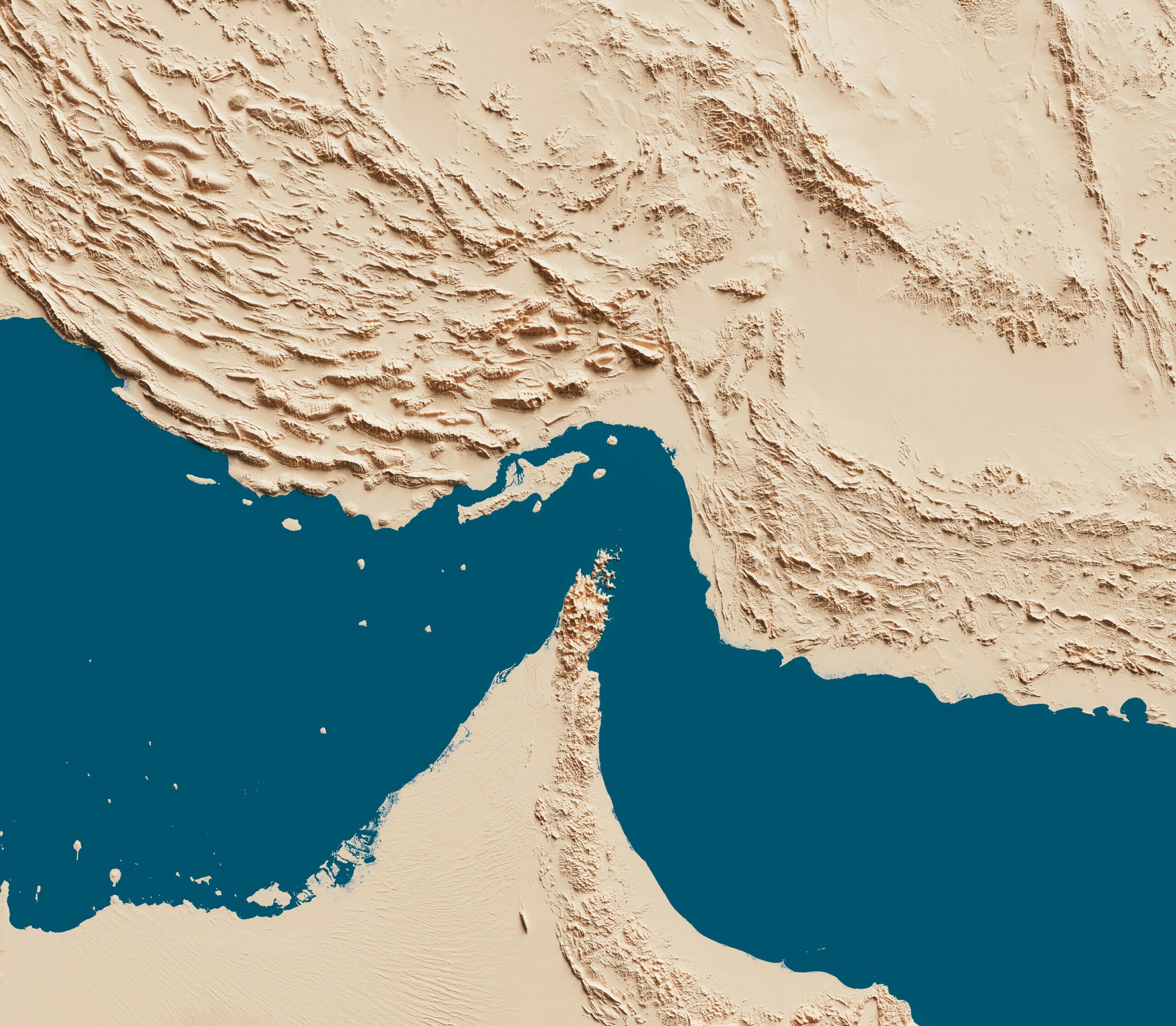
This is what a chokepoint failing looks like. A waterway that handled one-fifth of global seaborne oil trade in peacetime now operates at roughly 5 percent of its normal volume. The International Energy Agency has called the disruption the largest oil supply shock in the history of the global market. Approximately 2,000 ships remain stranded in the Gulf, waiting for safe passage that no commercial insurer will currently underwrite.
The Strait of Hormuz has gone from a technical detail in supply chain analysis to a defining variable in the global economy. This article explains how the strait functions as a chokepoint, why no alternative can replace it, what happened during the last major disruption in the 1980s, how markets price the risk in normal times versus crisis, what is actually happening in 2026, and what it all means for investors. It is the third article in the Middle East geopolitics cluster, building on the pillar piece on oil and geopolitics and the Iran sanctions explainer.
The Geography That Makes It Critical
The Strait of Hormuz is the only sea route connecting the Persian Gulf to the open ocean. At its narrowest point, it is 33 kilometers wide. The navigable channels for large vessels are much narrower with two designated shipping lanes, each two miles wide, separated by a buffer zone.
The narrow point sits between Iranian territorial waters to the north and Omani territorial waters to the south. Any commercial vessel transiting the strait passes through one of these two sovereign jurisdictions. There is no international-waters route that avoids both.
Why Pipelines Cannot Replace It
The most-discussed alternative to seaborne transit is overland pipeline. Saudi Arabia operates the East-West pipeline, which can move approximately 5 million barrels per day from the Gulf to Red Sea export terminals, bypassing Hormuz entirely. The UAE’s Habshan-Fujairah pipeline can move roughly 1.5 million barrels per day to the Indian Ocean coast.
Together these alternatives can absorb about 6.5 million barrels per day. The Strait of Hormuz normally carries 20 million barrels per day. The gap is the structural reason no amount of pipeline construction can substitute for the strait.
LNG is even more constrained. Qatar produces roughly 20 percent of global LNG, and essentially all of it must transit the Strait of Hormuz to reach buyers. There is no LNG pipeline alternative. There is no commercial volume of LNG that can be moved overland from Qatari production sites to anywhere outside the Gulf.
What Actually Passes Through
The traffic through the strait in peacetime falls into three main categories. The first is crude oil and condensates, primarily from Saudi Arabia, Iraq, the UAE, Kuwait, Iran, and Qatar, moving to refineries in Asia, Europe, and the Americas. The second is refined petroleum products, including diesel, jet fuel, and naphtha. The third is LNG, primarily from Qatar, moving to gas-importing economies including Japan, South Korea, China, India, and across Europe.
Asia is the dominant destination. Approximately 80 percent of crude oil transiting the strait moves to Asian buyers. This makes Hormuz disruption disproportionately important to Asian economies, even though the resulting price effects ripple through global markets.
The Tanker War: A Historical Precedent
The current crisis is not the first time the Persian Gulf has been a war zone for oil shipping. Between 1980 and 1988, during the Iran-Iraq War, both combatants attacked oil tankers transiting the strait and the Gulf. The episode came to be called the Tanker War.
Approximately 451 commercial vessels were attacked during the eight-year period. The Iranian Revolutionary Guard, then a relatively new force, used speedboats, naval mines, and silkworm anti-ship missiles. Iraq used aircraft-launched munitions and anti-ship missiles.
The market response is the most relevant part of the historical record. War risk insurance premiums for vessels transiting the Gulf rose to roughly 20 times peacetime levels. Some shipping companies removed their vessels from the route entirely. Others continued operating with substantially higher costs passed through to freight rates and ultimately to refined product prices in importing countries.
The oil kept flowing. The Tanker War never closed the strait. It made transit more expensive, more risky, and concentrated among operators willing to accept the elevated risk profile. The market absorbed the disruption through pricing rather than through alternative supply.
This historical record matters because it offers the closest analogue to the current 2026 situation, with one critical difference: the Tanker War was a contest between two regional combatants. The current closure is enforced by Iran specifically as state policy, with the explicit goal of denying passage.
How Markets Price Hormuz Risk
Hormuz risk is priced through several distinct mechanisms in normal times.
War Risk Insurance
The most visible single price is the war risk insurance premium on vessels transiting the strait. In peacetime, this premium runs at approximately 0.125 percent of a vessel’s insured value per transit. For a very large crude carrier worth $80 million, this works out to roughly $100,000 per voyage.
In the weeks before the February 2026 strikes, as tensions escalated, the premium rose to between 0.2 percent and 0.4 percent — an increase of approximately a quarter of a million dollars per transit for a VLCC. On March 5, 2026, war risk cover for the strait was effectively removed by major insurers, making commercial transit economically prohibitive regardless of operator willingness.
The market pricing here is sharp and immediate. Insurance underwriters track the strait continuously and adjust premiums in near-real-time based on threat assessments. Their judgments tend to be more accurate than political commentary about the actual operational risk because their financial exposure depends on getting it right.
Freight Rates
Beyond insurance, freight rates for vessels willing to take Gulf cargoes have risen dramatically. Operators charge premiums to compensate for risk to crew, vessel, and cargo. These freight premiums flow through to refined product prices in importing countries, which is one of the channels through which Hormuz risk becomes inflation in distant economies.
Oil Price Premia
The clearest single signal is the price of Brent crude itself. Before the war, Brent traded around $72 per barrel. After the closure was announced on March 4, prices peaked above $126 per barrel. As of late April 2026, Brent has settled around $114, still over 50 percent higher than pre-war levels. This premium reflects both the actual supply disruption and the market’s pricing of continued uncertainty about when full transit resumes.
The 2026 Situation in Detail
The current crisis began with US-Israeli strikes on Iran on February 28, 2026. Iran responded with missile and drone attacks on US bases and allied Gulf states. On March 2, the Iranian Revolutionary Guard officially declared the strait closed. On March 4, Iran formally announced restriction of passage to all but “non-hostile” states and approved vessels.
Within days, the practical reality of closure took shape. QatarEnergy declared force majeure on all LNG shipments on March 4, removing approximately 20 percent of global LNG supply from the market overnight. Major shipping companies including Maersk, MSC, CMA CGM, and Hapag-Lloyd suspended all transits. The UK Maritime Trade Operations Centre reported over a dozen attacks on vessels in March alone, with multiple crew fatalities.
The diplomatic response has produced a complex situation. The US imposed a counter-blockade on Iranian ports on April 13. Direct US-Iran talks in Islamabad on April 11-12, the highest-level engagement since 1979, failed to produce agreement. Russia and China vetoed a UN Security Council resolution on April 7 that would have authorized force to reopen the strait. France and the UK convened two conferences on insurance, sanctions, and diplomatic options.
Iran has established what it calls “alternative routes” through its own territorial waters past Larak Island, requiring vessels to coordinate with the IRGC and in some cases pay tolls. The official IMO shipping corridor has been almost entirely abandoned. Roughly half of vessels that have transited the strait in recent days loaded cargoes at Iranian ports in defiance of the US blockade.
The mine threat is the most operationally significant constraint on reopening. Iran laid sea mines in the strait early in the conflict. The Pentagon informed the House Armed Services Committee on April 21 that clearing the strait of mines could take six months after hostilities cease. Any residual mine risk deters commercial insurers from underwriting transit, regardless of any ceasefire announcement.
As of early May 2026, the strait remains effectively closed to commercial traffic at any meaningful volume. The shipping industry forecaster DHL estimates 4-6 months for shipping normalization once a sustained ceasefire is in place.
What This Means for Investors
Three implications follow from the analysis.
The first is that Hormuz risk is now a permanent variable in oil and gas price formation. Even if the current crisis resolves cleanly, the demonstrated willingness of Iran to close the strait and the demonstrated inability of the international community to keep it open through force or diplomacy have raised the long-term risk premium on Gulf transit. Investors with energy sector exposure should expect this risk premium to remain elevated for years.
The second is that producer responses to Hormuz disruption create distinct investment patterns. Saudi Aramco reported a 25 percent jump in Q1 2026 profits, driven partly by its ability to redirect exports through the East-West pipeline. Producers with pipeline alternatives outperform those without during crises. Gulf-focused energy companies whose entire export capacity depends on seaborne transit through the strait carry concentrated geographic risk that less Hormuz-dependent producers do not.
The third is that the LNG market has been more disrupted than the oil market and presents distinct investment dynamics. Unlike oil, there is no meaningful LNG pipeline alternative for Qatari production. The disruption has accelerated LNG infrastructure investment globally, particularly in the United States, Australia, and East Africa, where new export capacity is being built or expanded. Investors with infrastructure exposure should expect this trend to persist regardless of the current crisis’s resolution.
Important: These are general informational considerations, not personalized financial advice. Always consult a qualified financial advisor before making investment decisions.
Conclusion
The Strait of Hormuz is not a metaphor. It is a 33-kilometer-wide piece of water through which one-fifth of the world’s oil normally moves, and which has been operating at 5 percent of its normal capacity since March 2026.
The mechanics of how this single chokepoint affects global markets are clear. Insurance premiums rise. Freight rates rise. Some producers redirect through pipelines while others see exports collapse. LNG markets seize because there is no pipeline alternative. The result is higher energy costs, higher inflation pressure, and higher central bank rates in every economy connected to global energy markets which is to say, essentially all of them.
The 2026 closure is the most serious test of the Hormuz chokepoint since the 1980s Tanker War. Unlike the Tanker War, this closure is enforced as deliberate state policy by one of the two countries that controls the strait’s territorial waters. The historical precedent suggests oil will continue to flow at higher cost. The current data confirms this is happening. The longer-term implication is that Hormuz risk is permanently elevated in the global energy market, regardless of how the immediate crisis resolves.
The next article in this cluster examines Saudi Arabia’s Vision 2030 and the kingdom’s strategy for navigating a world in which its single most important asset depends on a chokepoint it cannot fully control.