
What Is the Federal Reserve and How Does It Move Markets?
The Fed announces a 0.25% rate change. Within minutes, stocks swing, bond yields jump, and your mortgage quote looks different than it did this morning. Nine people sitting around a table in Washington just rearranged trillions of dollars in global capital. Understanding how the Federal Reserve actually moves markets is not optional knowledge for anyone with savings, a mortgage, or a retirement account. It is the foundation of nearly every financial decision you will make.
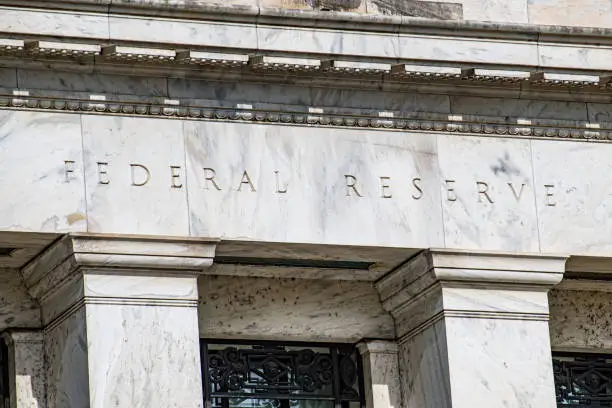
What Is the Federal Reserve?
The Federal Reserve, often called the Fed, is the central bank of the United States. Created by Congress in 1913 after a series of banking panics, its job is to keep the US economy stable. That stability rests on what the Fed calls its dual mandate: keeping prices stable, meaning inflation around 2%, and keeping employment high.
The Fed is structured in three parts. The Board of Governors is a group of seven officials based in Washington, appointed by the President and confirmed by the Senate. There are also twelve regional Federal Reserve Banks scattered across the country, from New York to San Francisco, each one watching its local economy. And finally there is the Federal Open Market Committee, or FOMC, which is the group that actually sets interest rates. The FOMC meets eight times per year and its decisions ripple through every corner of the financial system.
What makes the Fed unusual is its independence. It does not answer directly to the White House or to Congress on day-to-day decisions. That independence exists for a reason. Politicians facing elections tend to want low interest rates and easy money. Central bankers, free from that pressure, are supposed to make harder choices when the economy needs them.
That independence is being tested right now. Chair Jerome Powell ends his term on May 15, 2026, with Kevin Warsh expected to succeed him after Senate confirmation. The April FOMC meeting also saw four officials dissent, the most since 1992. Markets are paying close attention.
How Does the Fed Actually Move Markets?
This is where theory meets your investment portfolio. The Fed does not directly set the interest rate on your mortgage, your savings account, or your credit card. What it controls is the federal funds rate, the rate that banks charge each other to lend money overnight. From there, the effects spread out like ripples.
When the Fed raises that rate, borrowing becomes more expensive for banks. Banks pass those higher costs along to you in the form of higher mortgage rates, higher car loan rates, higher credit card APRs. Companies face higher borrowing costs too, which slows hiring and investment. Stocks tend to fall because future profits are worth less when interest rates are higher, and because bonds suddenly look more attractive by comparison.
When the Fed cuts rates, the opposite happens. Borrowing gets cheaper, companies invest more, consumers spend more, and stocks usually rally because cheap money tends to flow into riskier assets searching for yield.
The transmission is fast. Bond markets often move within seconds of an FOMC announcement. Currency markets follow. Equity markets digest the decision over hours and days. By the end of the week, the housing market, the auto market, and corporate hiring plans have all started adjusting.
Right now the federal funds rate sits in a target range of 3.50% to 3.75%, held there for the third meeting in a row. That number is the gravitational center pulling on everything else.
The Tools the Fed Uses
The Fed has more than one lever. Understanding each one helps you make more informed decisions while understanding how macroeconomics shape the markets.
The Federal Funds Rate
The headline tool. By raising or lowering the target range, the Fed influences every other interest rate in the economy. This is what people mean when they say the Fed is hiking or cutting.
Open Market Operations
The Fed buys and sells US Treasury bonds in the open market. Buying bonds pumps money into the financial system. Selling bonds pulls money out. This is the day-to-day plumbing that keeps the federal funds rate inside its target range.
Quantitative Easing and Tightening
A more aggressive version of open market operations. During the 2008 financial crisis and again during the COVID-19 pandemic, the Fed bought trillions of dollars worth of bonds to flood the system with liquidity. That is QE. The reverse process, letting those bonds roll off the balance sheet, is QT. Both have massive effects on long-term interest rates and asset prices.
Forward Guidance
Sometimes the Fed moves markets simply by talking. When Chair Powell hints at future rate cuts in a press conference, traders reprice trillions of dollars in assets before he finishes the sentence. The words themselves are a tool.
The Phillips Curve and the Fed’s Impossible Trade-Off
To understand why the Fed is so divided right now, it helps to know about the Phillips curve. Named after economist William Phillips, who studied British wage data in 1958, the idea is simple: inflation and unemployment tend to move in opposite directions. When unemployment falls and the labor market tightens, workers gain bargaining power, wages rise, and businesses pass those costs on as higher prices. When unemployment rises, the opposite happens. Prices cool. The Phillips curve is essentially a map of the Fed’s dual mandate, showing the trade-off between its two goals on a single chart.
In practice, this is the bind the Fed faces every meeting. Cut rates to support jobs and inflation may flare up again. Hold rates high to crush inflation and unemployment may climb. The 2021 to 2023 episode was unusual because both inflation and unemployment misbehaved at the same time, partly because supply-chain shocks broke the normal relationship. Today the Fed is back inside the textbook trade-off. Inflation is elevated, the labor market is cooling, and every basis point of policy is a bet on which side of the Phillips curve poses the bigger risk. That is why the April vote split 8 to 4. The dissenters are not arguing about data. They are arguing about which mistake is worse: leaving rates too high for too long, or cutting too soon and letting inflation reignite.
Why the Fed Matters Right Now
The April 2026 meeting was not a routine pause. The 8-4 vote was the most divided FOMC decision in over thirty years. One governor, Stephen Miran, wanted to cut rates immediately. Three others, including the presidents of the Cleveland, Minneapolis, and Dallas Fed banks, opposed the dovish language in the official statement.
The split reflects a genuinely difficult moment. Inflation remains elevated, partly because the war in the Middle East has pushed oil prices higher. At the same time, the labor market is cooling and the housing market is straining under high mortgage rates. The Fed is being pulled in two directions at once.
Add to that the leadership transition. Powell hands over the chairmanship on May 15, though he plans to remain on the Board of Governors. Kevin Warsh, the incoming chair, is widely expected to favor a more dovish path with deeper rate cuts. Markets are already pricing in that shift.
For investors and savers, this matters because the next twelve months could look very different from the last twelve. Rate-sensitive sectors like real estate, regional banks, and small-cap stocks tend to benefit from a cutting cycle. Holders of cash and short-term bonds see their yields fall. Long-duration bonds tend to rally.
How Fed Decisions Reach Your Wallet
The connection between an FOMC vote and your personal finances is more direct than most people realize. Here are the main channels.
Your mortgage. Mortgage rates loosely follow the 10-year Treasury yield, which is heavily influenced by Fed policy and expectations. A shift in Fed direction can change a 30-year mortgage rate by half a percentage point or more within weeks.
Your savings account. High-yield savings rates and money market fund yields move with the federal funds rate. When the Fed cuts, the 4% you might earn today could drop toward 2% within a year.
Your credit card. Most credit card APRs are tied to the prime rate, which moves in lockstep with the Fed. A cut helps borrowers, a hike hurts them.
Your stock portfolio. Equity valuations depend heavily on interest rates. Lower rates generally lift stocks. Higher rates generally pressure them, especially growth stocks and tech.
Your bond holdings. Bond prices move opposite to interest rates. A Fed pivot can produce gains or losses in your bond portfolio without you doing anything at all.
How to Position Yourself Around Fed Decisions
You cannot predict what the Fed will do, and trying to time the market around FOMC meetings is a losing game for most investors. What you can do is build a recession-proof portfolio that responds sensibly to whatever the Fed does next. Here are five practical strategies worth considering.
1. Diversify Across Rate Environments A well-built portfolio holds assets that perform differently in different rate environments. Stocks, bonds, real estate, and a small allocation to gold or commodities tend to move out of sync. When one suffers from a Fed move, another typically benefits.
2. Pay Attention to Bond Duration Long-duration bonds rally hard when rates fall and lose value when rates rise. Short-duration bonds are far less sensitive. If you expect cuts ahead, lengthening duration can boost returns. If you expect hikes, shorter is safer.
3. Lock in High-Yield Savings While You Can When the Fed begins a cutting cycle, savings rates drop quickly. Certificates of deposit and Treasury bills let you lock in current yields for months or years. With the Fed signaling potential cuts, this window may not stay open forever.
4. Watch the Yield Curve The relationship between short-term and long-term Treasury yields tells you what bond markets expect from the Fed. An inverted yield curve, where short rates exceed long rates, has historically preceded recessions. A normalizing curve often signals the Fed is approaching the end of its tightening or beginning to cut.
5. Avoid Overreacting to Single Meetings The biggest mistake retail investors make is treating each FOMC meeting like a turning point. Most meetings change very little. The trend over six to twelve months matters far more than any single decision. Build a strategy that does not depend on you guessing right every six weeks.
Important: These are general informational strategies, not personalized financial advice. Always consult a qualified financial advisor before making investment decisions.
Key Takeaways
- The Federal Reserve is the US central bank, with a dual mandate to keep prices stable and employment high
- The federal funds rate currently sits at 3.50% to 3.75%, held steady through April 2026
- The Fed moves markets through interest rates, bond purchases, and forward guidance
- A leadership transition is underway, with Kevin Warsh set to replace Jerome Powell as Chair on May 15, 2026
- Rate decisions reach your wallet through mortgages, savings rates, credit cards, stocks, and bonds
- Building a portfolio that performs across rate environments matters more than predicting the next meeting
Conclusion
The Federal Reserve is not a distant institution making decisions that have nothing to do with you. Every rate move, every meeting statement, every word from the Fed Chair sends shockwaves through the price of your home, the yield on your savings, and the value of your retirement account. Understanding how the Fed works is the difference between watching markets happen to you and making informed decisions in response to them. With a new chair arriving and the rate cycle approaching a turning point, the months ahead will be a real-world lesson in monetary policy. The investors who pay attention will be the ones best positioned for whatever comes next.