
A drone strikes a refinery 8,000 kilometers away. Within hours, the price of gasoline at your local station goes up. The grocery bill that used to come in around $150 now lands at $180. A war you have never seen, in countries you may never visit, is quietly reaching into your pockets every single week. This is not paranoia. It is how the global oil market actually works, and right now it is reshaping household budgets from Manila to Madrid.
This article is a map which explains why the Middle East still moves your portfolio in 2026, even if you do not invest in energy. It traces the channels through which a refinery strike in Saudi Arabia becomes a mortgage rate in Madrid by introducing the institutional machinery, the historical patterns, and the practical implications. It is the foundation piece for everything else this site will publish on Middle East geopolitics over the coming weeks.
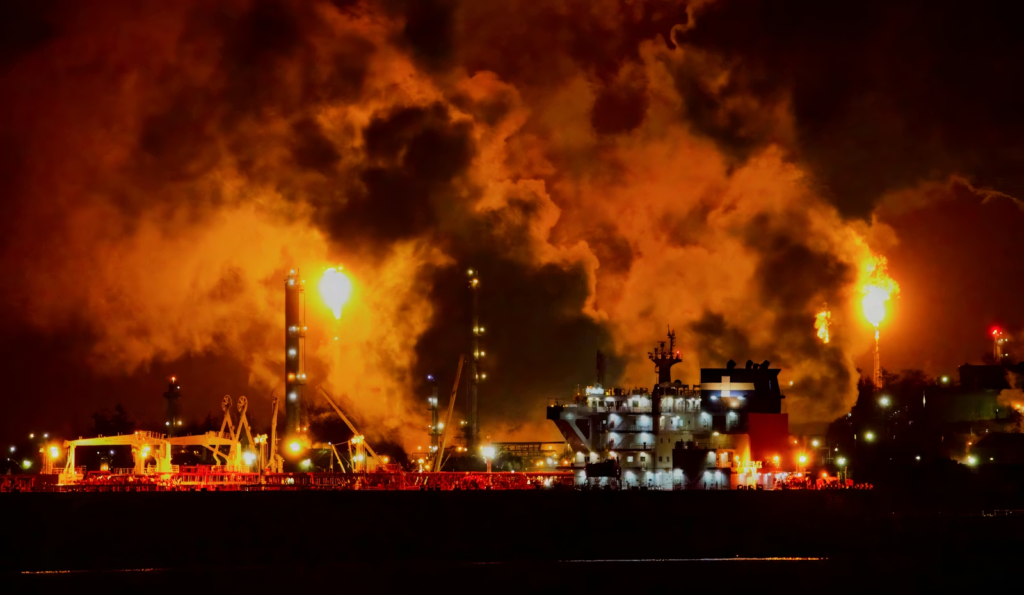
Why Oil Prices Are Geopolitical
Oil is not just another commodity. It is the bloodstream of the global economy.
Roughly 100 million barrels of crude flow through international markets every single day. The price of that crude touches almost everything you buy. Food has to be transported. Plastic comes from petroleum. Clothing is shipped on container vessels burning marine diesel. Even the electricity bill in countries that still rely on oil-fired power plants tracks the price per barrel.
That dependence makes oil deeply political. The countries that produce the most of it are clustered around a small region of the world: the Persian Gulf. Saudi Arabia, Iran, Iraq, Kuwait, the United Arab Emirates, and Qatar together control a massive share of global production and an even larger share of the cheap, easy-to-extract reserves the world will rely on for decades to come.
When that region is stable, oil flows, prices stay manageable, and inflation stays under control. When that region erupts, the entire global economy feels it within days. We are living through one of those moments right now.
The System Behind the Price
Before tracing how oil shocks reach your wallet, it helps to understand the institutional machinery that turns regional events into global prices. Three structures matter.
OPEC+ and the Coordinated Supply Decision
OPEC, the Organization of the Petroleum Exporting Countries, was founded in 1960. Since 2016, it has operated as OPEC+, an expanded grouping that includes Russia and several other major producers. The combined OPEC+ bloc controls roughly 40 percent of global oil production and a much larger share of the marginal barrel that sets the global price.
OPEC+ functions as a cartel. Member countries coordinate production decisions to manage supply, prices, and revenues. When the cartel cuts output, prices typically rise. When it floods the market, prices fall. The decisions are made in meetings at OPEC’s Vienna headquarters and announced through technical communiqués that move markets within minutes.
Saudi Arabia is the most important single voice in OPEC+. The country can swing its production by millions of barrels per day at low marginal cost, which gives it pricing power no other producer matches. Russia’s role grew sharply after 2016 and became more complicated after 2022, when Western sanctions reshaped its export channels.
The Swing Producer Dynamic
A swing producer is a country that can rapidly increase or decrease oil output to balance global markets. Historically this role has rotated. Texas held it in the early twentieth century. Saudi Arabia has held it for most of the past fifty years. US shale producers briefly contested it during the 2010s by ramping production quickly when prices rose.
The swing producer effectively sets the floor and ceiling for global prices. When oil rises too high, the swing producer increases output to bring prices down. When oil falls too low for the swing producer’s domestic budget needs, the producer cuts output to push prices back up.
In 2026, Saudi Arabia remains the dominant swing producer. US shale is structurally constrained by capital discipline, infrastructure bottlenecks, and shareholder demands for returns over growth. This concentrates pricing power in the Persian Gulf in a way that did not exist a decade ago.
The Petrodollar System
In 1974, the United States and Saudi Arabia reached an arrangement that shaped half a century of global finance. Saudi Arabia would price its oil exclusively in US dollars. In return, the United States would provide military protection and absorb Saudi surplus dollars through Treasury purchases. The petrodollar system, as it came to be known, made the dollar the default currency of oil trade and reinforced its position as the global reserve currency.
This system is now under quiet strain. Saudi Arabia has begun accepting renminbi for some oil sales to China. The United Arab Emirates has experimented with rupee settlement for Indian crude. Russia, under sanctions, has redirected oil exports toward non-dollar buyers entirely. None of this represents the immediate collapse of the petrodollar, but it does represent a structural shift that has been underway for several years.
A separate article on this site examines the petrodollar system in detail. The relevant point for the pillar piece is that the dollar’s centrality to oil trade is itself a geopolitical variable, not a permanent fact.
The Strait of Hormuz: The Most Important 33 Kilometers in the World
To understand why a war in Iran moves the price of a tank of gas in Barcelona or Boston, you need to know about the Strait of Hormuz.
This narrow waterway, just 33 kilometers wide at its narrowest point, separates Iran from Oman. Roughly 20 percent of the world’s oil and a similar share of liquefied natural gas pass through it every single day. There is no real alternative. Pipelines that bypass the strait can carry only a small fraction of the volume. If shipping through Hormuz is disrupted, oil cannot simply take a different route. It just does not flow.
Why Alternatives Cannot Replace It
Saudi Arabia’s East-West pipeline can move approximately 5 million barrels per day from the Gulf to Red Sea export terminals, bypassing Hormuz. The UAE’s Habshan-Fujairah pipeline can move roughly 1.5 million barrels per day. Together these alternatives can absorb perhaps 30 percent of the volume that normally passes through the strait. The remaining 70 percent has nowhere to go if Hormuz closes.
The Iran-Iraq War of the 1980s offered a preview. During what came to be called the Tanker War, both sides attacked oil shipping in the Gulf for years. Insurance premiums for vessels transiting the strait rose to twenty times their peacetime levels. Some tankers re-flagged under US or Soviet protection. The world’s oil supply continued moving, but at substantially higher cost.
The current situation is more acute. The Iran war that began on February 28, 2026 has produced periodic disruptions to Hormuz traffic. Brent crude jumped from around $72 a barrel before the war to a wartime peak near $126. As of late April 2026, prices have settled around $114, still over 50 percent higher than where they started the year.till over 50% higher than where they started the year. The World Bank released a report on April 28 estimating that this is the largest oil supply shock on record, with global oil supply initially cut by about 10 million barrels per day.
The Largest Oil Supply Shock on Record
The World Bank released a report on April 28, 2026 estimating that the Hormuz disruption constitutes the largest oil supply shock on record. Initial supply disruption was estimated at about 10 million barrels per day, exceeding the impact of the 1973 OPEC embargo and the 1979 Iranian revolution in absolute volume terms.
The duration matters as much as the magnitude. A short disruption is absorbed by inventories and emergency releases from strategic reserves. A sustained disruption rewires supply chains, forces investment in alternative infrastructure, and embeds higher costs into the broader economy. The 2026 shock has now lasted long enough to begin shifting from short-term volatility to structural change.
How Oil Prices Reach Your Wallet
The journey from a barrel of crude to your bank account is shorter than most people realize. Five channels matter most.
The Gas Pump
This is the most direct connection. A 50 percent rise in oil translates roughly to a 30 to 40 percent rise in gasoline at the pump, depending on local taxes and refining margins. In the United States, gas prices crossed $4 per gallon on March 31, 2026. In Europe, drivers in some countries are paying over €2 per liter. The pump is where most households first feel the shock.
Your Grocery Bill
Food production is enormously energy-intensive. Tractors run on diesel. Fertilizers like urea and ammonia are made from natural gas. Trucks bring food from farms to warehouses to supermarkets. Every step carries an energy cost.
World Bank data shows fertilizer prices are projected to jump 31 percent in 2026, with urea up 60 percent. That cost flows directly into bread, pasta, vegetables, and meat over the following months. Food inflation typically lags energy inflation by three to six months, which means the most severe grocery-bill impact of the 2026 shock is still ahead of most households.
Airline Tickets and Travel
Jet fuel typically makes up 25 to 30 percent of an airline’s operating costs. When oil spikes, ticket prices follow within weeks. Add to that the airspace closures across the Middle East, forcing flights between Europe and Asia to take longer routes that burn more fuel, and you have a double cost increase baked into every long-haul ticket.
Inflation Across the Board
Energy is not just a line item. It is an input to nearly everything else. When energy prices rise, the cost of producing almost any good rises with it. The World Bank now expects inflation in developing economies to reach 5.1 percent in 2026, a full percentage point higher than was projected before the war.
Interest Rates and Your Mortgage
Higher inflation forces central banks to keep interest rates higher for longer. The Federal Reserve cited the Middle East situation directly in its April 2026 statement as a reason to hold rates at 3.50 to 3.75 percent. Higher rates mean higher mortgage rates, higher car loan rates, and higher credit card APRs. The 30-year US mortgage rate climbed to 6.38 percent on March 26 as a direct consequence of the war.
The channel from oil to mortgage rates passes through inflation expectations, central bank credibility, and bond market term premia. None of these is visible to the household. The result: a higher monthly payment.
A Short History of Oil Shocks
This is not the first time geopolitics has rewired the global economy. Understanding past shocks helps you recognize what to expect next.
1973: The OPEC Embargo
Arab oil-producing nations cut off exports to countries that supported Israel during the Yom Kippur War. Crude prices quadrupled from roughly $3 per barrel to nearly $12 in a matter of months. The shock triggered stagflation across the Western world, hammered stock markets, and reshaped energy policy for a generation. US inflation reached 11 percent in 1974. The S&P 500 lost roughly 45 percent over the following two years.
1979: The Iranian Revolution
The fall of the Shah and the Iranian hostage crisis cut Iranian oil production by approximately 4.8 million barrels per day at peak disruption. Crude prices roughly doubled within a year, reaching about $40 per barrel. Combined with the OPEC embargo six years earlier, this period created the deepest economic recession the United States had seen since the 1930s. The Federal Reserve under Paul Volcker eventually raised interest rates to 20 percent to break the inflation that followed.
1990: Iraq Invades Kuwait
Saddam Hussein’s invasion sent oil prices from around $17 to over $36 a barrel in three months. The shock contributed to the early-1990s recession in the United States and Europe. The First Gulf War that followed restored oil flows relatively quickly, but the episode marked the beginning of a sustained US military presence in the Persian Gulf that has not ended.
2022: Russia Invades Ukraine
Brent crude spiked to nearly $140 a barrel as Western sanctions hit Russian energy exports. The shock fueled the worst inflation in 40 years, the same episode that triggered the Federal Reserve’s most aggressive rate-hiking cycle in four decades. Russian oil never left the global market entirely, but its routing was rebuilt around a shadow fleet of tankers and parallel financial channels that now sit alongside the regulated global oil trade.
2026: The Iran War
The current crisis is shaping up to be the largest oil supply shock on record by some measures, simply because of the volume of oil that flows through the Strait of Hormuz. The full economic damage will not be known for years, but the early data is consistent with the historical pattern. Inflation has accelerated. Central banks have paused easing cycles. Equity markets have absorbed the shock unevenly, with energy stocks rising sharply while consumer-facing sectors have weakened.
The pattern across these five episodes is consistent. Geopolitical conflict in oil-producing regions sends prices higher, drives inflation, forces central bank responses, and reshapes household budgets for years afterward.
Why the Middle East Will Keep Mattering
A common assumption is that renewable energy and electric vehicles are making oil less relevant. The data tells a different story, and the Middle East story extends well beyond oil itself.
Oil Demand Is Still Rising
Global oil demand in 2025 was higher than it has ever been. Even with millions of EVs on the road, total consumption keeps climbing because emerging economies in Asia and Africa are still growing and still industrializing. The International Energy Agency projects oil demand will not peak until at least 2030, and many analysts think it will be later.
The Middle East controls the cheapest barrels in the world. Saudi Arabia can pump oil for under $10 per barrel at the wellhead. US shale operators typically need $40 to $60 to break even. As long as global demand for oil exists and Middle Eastern producers hold the cost advantage, the region will remain the swing producer that sets the global price.
Gulf Sovereign Wealth Is a Global Force
The same revenues that flow into the Persian Gulf when oil is expensive are deployed back into global financial markets through sovereign wealth funds. Saudi Arabia’s Public Investment Fund manages roughly $925 billion. The Abu Dhabi Investment Authority manages over $800 billion. Qatar Investment Authority manages approximately $475 billion. Kuwait Investment Authority manages around $800 billion.
These funds are not passive savings accounts. They are active investors in technology, real estate, sports, infrastructure, and private equity worldwide. Saudi PIF stakes have shaped LIV Golf, Uber, Lucid Motors, and countless other businesses. ADIA holds positions across global equity and credit markets. Where these funds deploy capital matters for prices and valuations across entire asset classes.
A separate cluster article examines Gulf sovereign wealth strategy in detail. The point for the pillar piece is that Middle East financial influence operates as both a producer (oil revenues) and an investor (deployed capital). Both sides matter.
Israeli Technology Under Regional Fire
Israel hosts one of the world’s most concentrated technology ecosystems. Tel Aviv has the highest density of startups per capita outside Silicon Valley. Israeli firms in cybersecurity, semiconductors, defense technology, and artificial intelligence supply critical components and capabilities to global markets.
Regional conflict has not destroyed this ecosystem. It has tested it. Israeli tech companies operate with rocket alerts, reservist mobilizations, and political uncertainty as routine business conditions. The fact that the ecosystem continues to function, attract investment, and produce world-class technology under these conditions is itself an investment thesis worth understanding.
A separate cluster article examines Israel’s tech economy and the regional-conflict-investor paradox in detail.
The Sunni-Shia Fault Line as Financial Variable
The sectarian divide between Sunni and Shia Islam is the most consequential political fault line in the region. It maps onto specific countries (Saudi Arabia and most Gulf states are predominantly Sunni; Iran, Iraq, and Lebanon’s Hezbollah are predominantly Shia) or onto specific proxy conflicts (Yemen, Syria, parts of Iraq). It maps onto investment patterns, sanctions architectures, and oil market alignments.
Treating sectarian alignment as a financial variable rather than a religious one offers a sharper framework for reading regional risk. A separate cluster article develops this framework in detail.
Shipping, Insurance, and Red Sea Disruption
Beyond oil, the Middle East controls some of the world’s most critical maritime chokepoints. The Strait of Hormuz handles 20 percent of global oil. The Bab el-Mandeb strait, at the southern end of the Red Sea, handles 12 percent of global trade and 30 percent of global container shipping.
Houthi attacks on Red Sea shipping since 2023 have forced major shipping companies to reroute around the Cape of Good Hope, adding 10 to 14 days to voyage times and 20 to 30 percent to shipping costs. Maritime insurance premiums for vessels transiting the region have risen dramatically. Container shipping rates from Asia to Europe spiked 200 percent during peak disruption periods.
This affects everything from automobile parts availability to clothing prices to electronics delivery times. A separate cluster article examines the Houthi attacks, Red Sea disruption, and global trade impact in detail.
How to Protect Your Wallet From Oil Shocks
You cannot prevent geopolitical conflict, but you can build financial habits that absorb shocks better than the average household. Five strategies are worth considering.
Hold Some Energy Exposure in Your Portfolio
Oil and gas companies typically benefit when crude prices rise. A small allocation, perhaps 5 to 10 percent, to a broad energy sector ETF can act as a natural hedge against energy-driven inflation. When you pay more at the pump, your portfolio earns more from the same trend.
The choice within energy matters. Integrated oil majors (Exxon, Chevron, Shell, BP, TotalEnergies) carry different risk and return characteristics from upstream specialists (Pioneer, Devon, Occidental), which differ again from oilfield services firms (Schlumberger, Halliburton, Baker Hughes). Diversified energy sector ETFs blend these exposures and remove single-company risk for most retail investors.
Own Real Assets That Move With Inflation
Real estate, gold, and commodity ETFs tend to hold value during energy-driven inflation. Gold in particular has had multiple all-time highs during the 2026 crisis. These assets do not generate income the way stocks do, but they preserve purchasing power when fiat currency is being eroded.
Gold’s track record across the five historical oil shocks discussed above is striking. It rose substantially during each one, often outperforming equities and bonds by wide margins. This site has a dedicated article on gold during economic crises that traces the data in detail.
Lock In Fixed-Rate Borrowing When You Can
When inflation rises, central banks raise rates, and floating-rate debt becomes more expensive. Fixed-rate mortgages and personal loans protect you from this. If you locked in a low rate before 2022, do not let it go without a serious reason.
The category that matters most here is long-duration debt; primarily mortgages. A 30-year fixed-rate mortgage at 3 percent is one of the most valuable financial positions a household can hold in an inflationary environment, because the real cost of the debt erodes over time while the asset (the home) typically appreciates with the broader price level.
Build a Larger Emergency Fund
Energy shocks ripple through job markets. Industries that depend on cheap energy, like trucking, airlines, and certain manufacturers, can cut staff quickly when costs rise. An emergency fund that covers six months of expenses, not the standard three, is a sensible upgrade in a high-volatility era.
This site has a dedicated article on building an emergency fund in Europe that examines how the math changes for European workers compared with American ones.
Reduce Direct Energy Exposure Where You Can
This is the long-game strategy. A more efficient car, better home insulation, a heat pump instead of a gas boiler, even just less driving. Every kilowatt-hour and every liter of fuel you do not need to buy is a hedge against the next oil shock that no portfolio adjustment can match.
Important: These are general informational strategies, not personalized financial advice. Always consult a qualified financial advisor before making investment decisions.
Key Takeaways
- The Middle East controls roughly a third of global oil production and the cheapest reserves on Earth
- The Strait of Hormuz alone carries about 20 percent of the world’s oil and LNG every day
- OPEC+ functions as a coordinated cartel that sets the marginal supply for global oil markets
- The petrodollar system, while under strain, still anchors most oil trade to the US dollar
- The 2026 Iran war has been called the largest oil supply shock on record by the World Bank
- Brent crude has stayed over 50 percent higher than its early-2026 level despite ceasefire attempts
- Oil prices reach you through gasoline, groceries, airline tickets, inflation, and mortgage rates
- The region’s influence extends beyond oil through sovereign wealth, technology, and shipping
- Building a portfolio with real assets, energy exposure, and fixed-rate debt provides durable protection
Conclusion
The wars in the Middle East are not abstract foreign policy debates. They are the price of bread next month, the mortgage rate on your next refinance, the cost of the flight home for the holidays. For as long as the global economy runs on oil, what happens in the Persian Gulf will continue to shape what happens in your bank account.
This article is the foundation. The threads it introduces — OPEC+ mechanics, the petrodollar system, Iran sanctions, Saudi sovereign wealth, Israeli technology, sectarian financial risk, Red Sea shipping disruption — each warrant deeper examination. Over the coming weeks, this site will publish detailed articles on each thread, building out a comprehensive map of how Middle East geopolitics shapes global finance.
The investors and households who understand this connection are the ones best prepared for whatever comes next. Given the trajectory of the current crisis, more is almost certainly coming.